
NEW HOMES FOR AGING BOOMERS
Email or call us with your question!  Throughout their lives, baby boomers have viewed the world and lived their lives differently than other generations. So it’s not surprising that as they reach middle age, their dream retirement home also differs from that of their predecessors.
Many boomers aren’t planning to downscale after they retire, or at least not to the extent that their parents and grandparents did. Today’s middle aged population is accustomed to larger homes. According to the National Association of Home Builders, the average size of new American homes has doubled in the last half century (from 983 square feet in 1950 to 2,225 square feet in 1999).
That’s not to say boomers aren’t planning for the future in practical ways. As boomers in their 40s and 50s are becoming empty nesters, more and more of them are choosing flexible homes that will allow them to age in place. These are some of the amenities these buyers are looking for:
1. In general, this group wants houses that will meet their needs if their mobility becomes impaired as they age, but they don’t want special accommodations to be obvious. Open floor plans, wider hallways and 30-inch (minimum) doorways make homes appealing without giving them an “old folks” look. This can be accomplished in smaller homes by creating fewer, larger rooms.
2. In the same way, oversized windows make a home bright and airy, while providing the extra light that may be necessary as visual acuity decreases. Task lighting should also be added in work areas in the kitchen and garage.
3. As boomers look forward to having more time for extended family gatherings and entertaining friends, adequate dining space is especially important. Given the choice between a formal living or dining room, most will choose the dining room.
4. They appreciate having at least one room situated so that it can be used for different purposes as their needs change, such as a room that could be used as a den, living room or a guest room.
5. In the past, the standard retirement home was a 1-story. Today, many buyers are also choosing 1 ½ story homes because they are more economical and still provide a main floor master suite, plus extra upstairs bedrooms for visits from grown children.
6. The master bedroom should be large enough to accommodate a wheelchair after furniture is in place. The master bath should also have ample clearance, plus a walk-in shower, preferably with a built-in seat. Special supports should be added behind walls during construction where grab bars might be installed should the need arise. Lever spigots are easier to use than knobs at any age, but especially helpful for hands weakened by arthritis. Slip-resistant flooring is also important.
7. Kitchens should have room for a wheelchair to move around freely. Side-by-side refrigerator/freezers and side-swing or wall ovens are easier for someone in a wheelchair to use. Microwaves should be at counter height or in a wall. Cabinet heights and provisions such as pull-down shelving can be adjusted and added as the need arises.
8. The laundry room should also be on the main floor. A folding counter and window will make laundry tasks easier and more pleasant. Home buyers looking ahead may want to select front-loading washers and dryers and consider having them raised 12 to 15 inches off the floor.
9. At least one outside entrance should have a zero clearance. Commonly, the entrance from the garage accomplishes this, providing convenience to people of any age bringing groceries in from the car. A rear porch (with no steps) is another popular feature for folks who have time to stop and smell the roses.
10. Steps leading to a second floor or the basement should be four feet wide, in a straight run, to ease installation of a chair lift. Or, closets should be stacked on both floors to allow for an elevator in the future.
11. Garages should be at least 22 feet wide (for a double garage) with an adequate access aisle around vehicles.
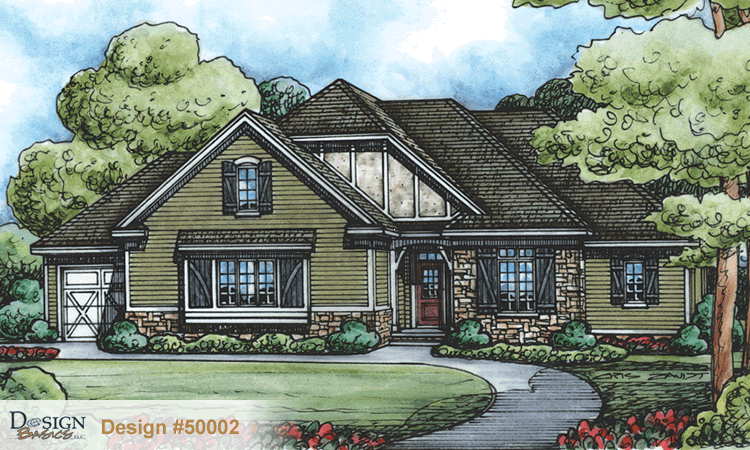
The Tucker, Design 50002
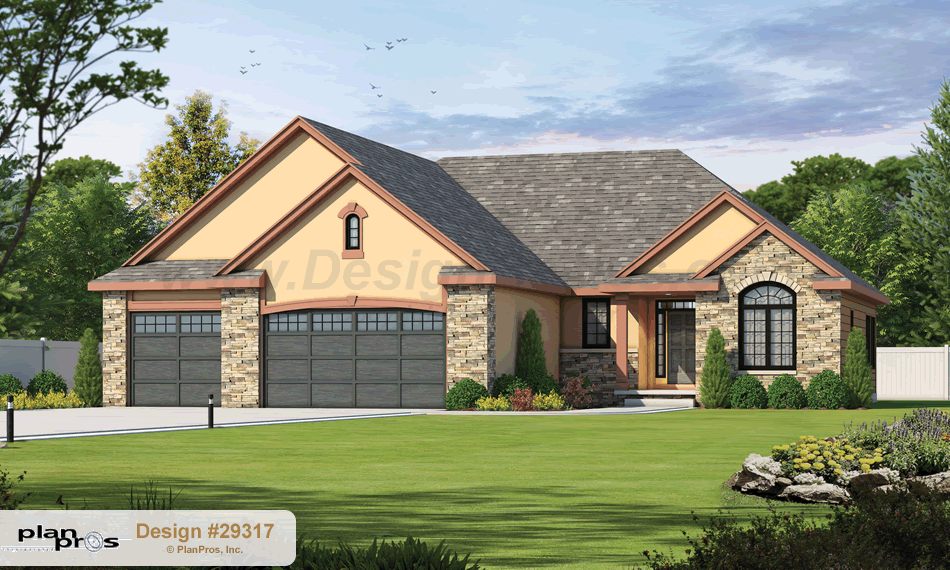
The Carswell, Design 29317
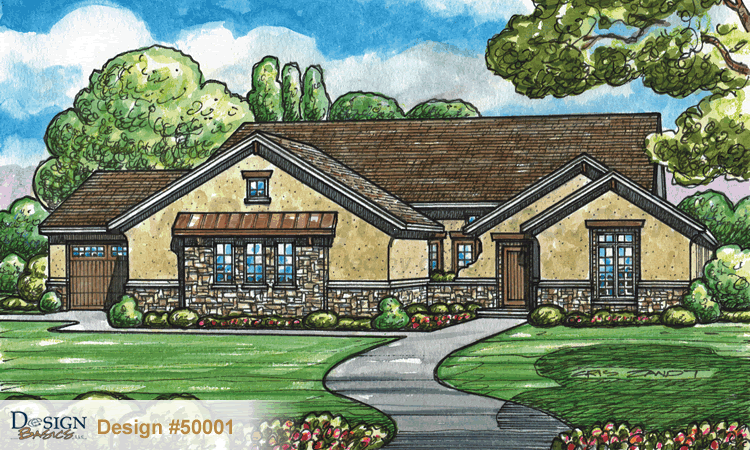
The Dewalt, Design 50001
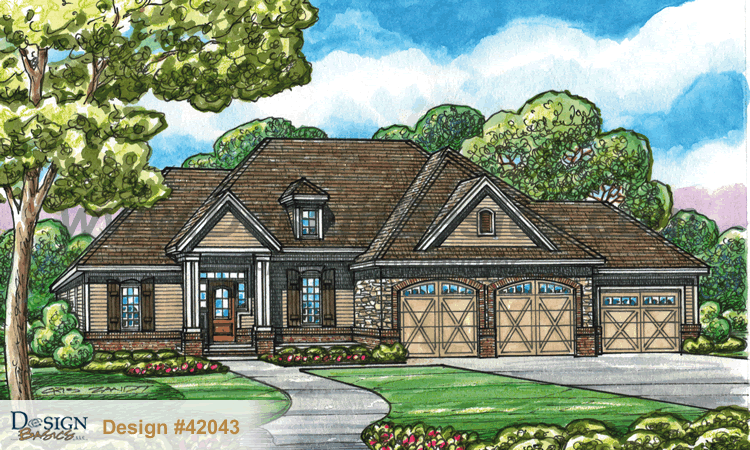
The Arquette, Design 42043