Insulated Concrete Forms (ICF) Construction
The list of major homeowner benefits using Insulated Concrete Forms construction technology is impressive:
Strength: ICF walls benefit from concrete’s inherent structural qualities, particularly important in regions affected by severe weather.
Lower Utility Bills: The combination of a continuous concrete wall plus the integral interior and exterior insulation provides superb energy efficiency.
Indoor Environmental Quality: ICF’s energy efficiency translates into more even, consistent temperatures throughout the home. Outdoor pollutants can be kept to a minimum – particularly important to allergy sufferers. A fresh air exchanger (strongly recommended) helps regulate humidity in the home for maximum comfort.
Soundproofing: With several inches of concrete sandwiched by foam insulation, ICF homes are typically quieter than neighboring homes built conventionally.
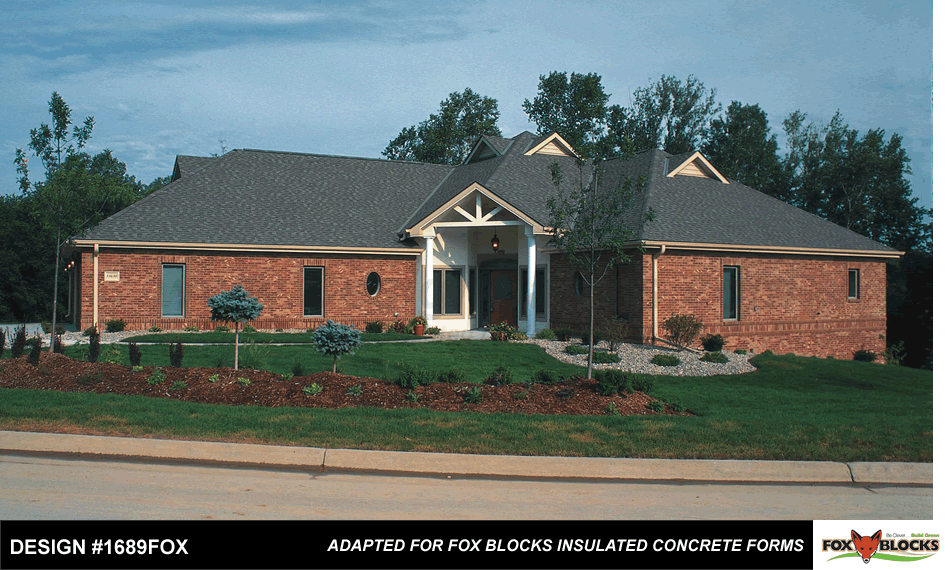
Adapting Home Plans to ICF Construction
ICF construction is compatible with virtually all home designs. Once built, ICF homes are indistinguishable from their traditionally-framed counterparts. Yet, there are some differences in building homes with ICF.
The most obvious difference is the increased wall thickness. Due to the thicker exterior walls, the overall width, depth, and square footage of a home is usually increased not crimp on room sizes.
Due to increased overall dimensions, the roof system will be bigger for an ICF home. Typically, the roof geometry will stay basically the same, but the ridge heights will increase. Of course, the foundation changes as well. Additionally, wall thickness varies among ICF manufacturers.
Check with the original home plan designer or architect with regard to modifying a particular set of plans to work with ICF. Or, ask your ICF manufacturer about modifying plans for ICF construction. Many of the manufacturers have a network of designers or architects familiar with ICF building who can modify your plans.
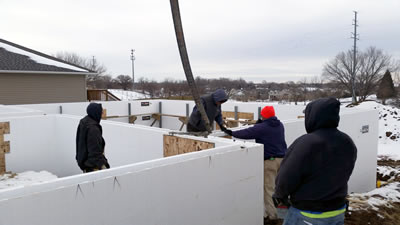
Factors to Consider
Waterproofing materials for an ICF basement may need to be different (e.g., petroleum-based tar would melt the exterior foam on the ICF form). Windows and doors will need to be ordered with wider jamb extensions to accommodate the increased wall thickness. Another major factor is the level of manufacturer support, including training, on-site and technical support, and marketing materials.
Cost
Industry estimates suggest ICF homes may cost 0% to 10% more to build, depending on the manufacturer and other factors impacting local building costs. Importantly, the increased construction costs may be offset by lower utility bills. For example, a $300,000 30-year mortgage at 5% translates to $1,610 per month (P&I). If building the home using ICFs added $13,000 to the cost of the home, the monthly payment would increase to $1,659. If the energy efficiency of the ICF home reduced heating and cooling costs by an average of $49 per month, the lower utility bills cancel out the increased construction costs.
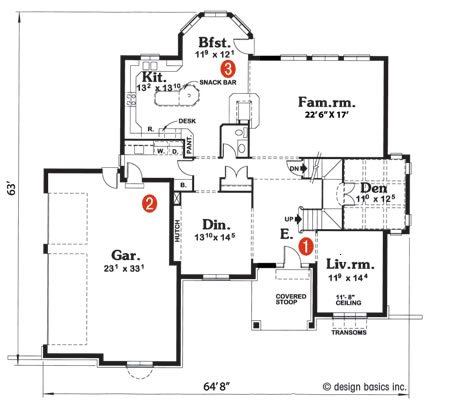
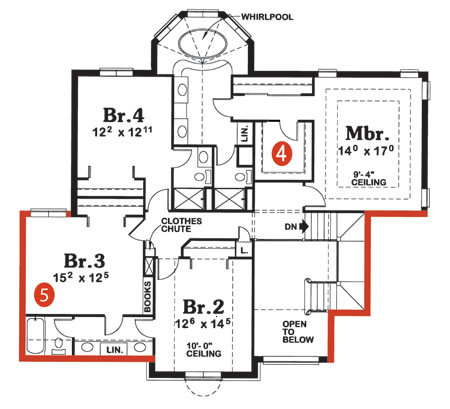
Anatomy of an ICF Plan Conversion
With over 2,500 home plans on our company’s website, with approximately 115 adapted for Insulated Concrete Form – ICF construction, one of the common requests we receive is to convert traditional stick-frame homes to ICF.
Please note: While Design Basics takes great pride in designing homes to be built using Insulated Concrete Forms (ICF), Design Basics neither builds homes nor supplies products for these building systems. These pages are for informational purposes only.